Mini sanding bands are small, cylindrical abrasive sleeves that fit onto a mandrel bit for an electric nail file. They are smaller in diameter than standard sanding bands, which makes them ideal for detailed work around the nail plate, sidewalls, cuticle area, and smaller nail beds. In professional and at-home nail care, they have become a quiet essential—not because they are flashy, but because they solve problems that larger tools cannot.
Here is a complete guide to using mini sanding bands in nail care, including why they are useful, how to use them safely, whether they can be used for cuticle treatment, and the correct way to handle cuticles.
Why Mini Sanding Bands Are an Ideal Nail Care Tool?
The first advantage is precision. Standard sanding bands are often too wide for tight areas. Mini bands allow you to reach the sidewalls, the edges of the cuticle, and the contours of small nails without touching the surrounding skin. This reduces the risk of accidental nicks and over-filing.
The second advantage is hygiene. Sanding bands are disposable. You use one band per client or per session and then discard it. Unlike metal bits that must be cleaned and sterilised, sanding bands eliminate cross-contamination. This is especially important in professional settings where clients share tools.
The third advantage is heat control. Mini sanding bands generate less friction heat than coarse carbide or ceramic bits. When used at low speed with light pressure, they are gentle on natural nails. They are also beginner-friendly. A fine-grit mini band behaves like a small hand file, but with the speed and control of an e-file.
Finally, they are versatile. They can be used for natural nail prep, gel polish removal, surface smoothing, sidewall cleaning, cuticle detail, and even pedicure work. A single pack of mixed-grit mini bands can cover most routine nail care tasks
-1024x1024.jpg)
How to Use Mini Sanding Bands in Nail Care?
Using mini sanding bands safely comes down to three things: grit, speed, and pressure.
Choose the right grit. For natural nails and cuticle work, always use a fine or extra-fine grit—usually 180 to 240 grit. Medium grit (120–150) is for removing gel polish or refining artificial enhancements. Coarse grit (80–100) is only for heavy product removal on acrylics or hard gels. Never use coarse grit on natural nails.
Set a low speed. For natural nail prep and cuticle detail, keep the e-file between 5,000 and 10,000 RPM. For gel removal, you can go slightly higher, but always start low. High speed with a fine grit still creates heat if you press too hard.
Use light pressure. Let the band do the work. Pressing down creates friction, heat, and unnecessary removal of nail layers. The goal is to glide, not to dig.
Keep the band moving. Never hold the band in one spot for more than a second. Move it in smooth, overlapping strokes. This prevents grooves, heat spikes, and thinning.
Hold the band flat. For surface work, keep the band parallel to the nail plate. For sidewall work, angle it slightly so the side of the band contacts the area you want to clean. Do not use the tip of the band to dig into the nail.
Work in one direction. Use gentle strokes from cuticle to free edge, or from sidewall to centre. Avoid sawing back and forth
Can Mini Sanding Bands Be Used for Cuticle Treatment?
Yes, but with an important clarification. Mini sanding bands can be used to remove dead cuticle tissue from the nail plate. They should not be used on the living cuticle or the proximal nail fold.
The cuticle is the thin, dead layer of skin that sits on the nail plate. This dead tissue can be gently exfoliated with a fine-grit mini band. The living skin around the nail—the proximal nail fold and sidewalls—should never be filed. It is living tissue that protects the nail matrix from infection. Filing it causes pain, bleeding, and damage.
So, mini bands are safe for cuticle removal from the nail plate, but not for cutting or filing the living skin around the nail. Use a fine-grit band at low speed, keep it on the nail plate only, and stop when the nail surface looks clean and smooth.
The Correct Way to Handle Cuticles in Nail Care
Cuticle care is not about cutting. It is about maintenance.
Soften first. After a shower or a short soak, apply a cuticle softener or use warm water to make the dead tissue pliable
Push, don’t cut. Use a wooden or rubber-tipped cuticle pusher to gently push the cuticle back from the nail plate. Work from the centre outward. The tool should glide. Never force it.
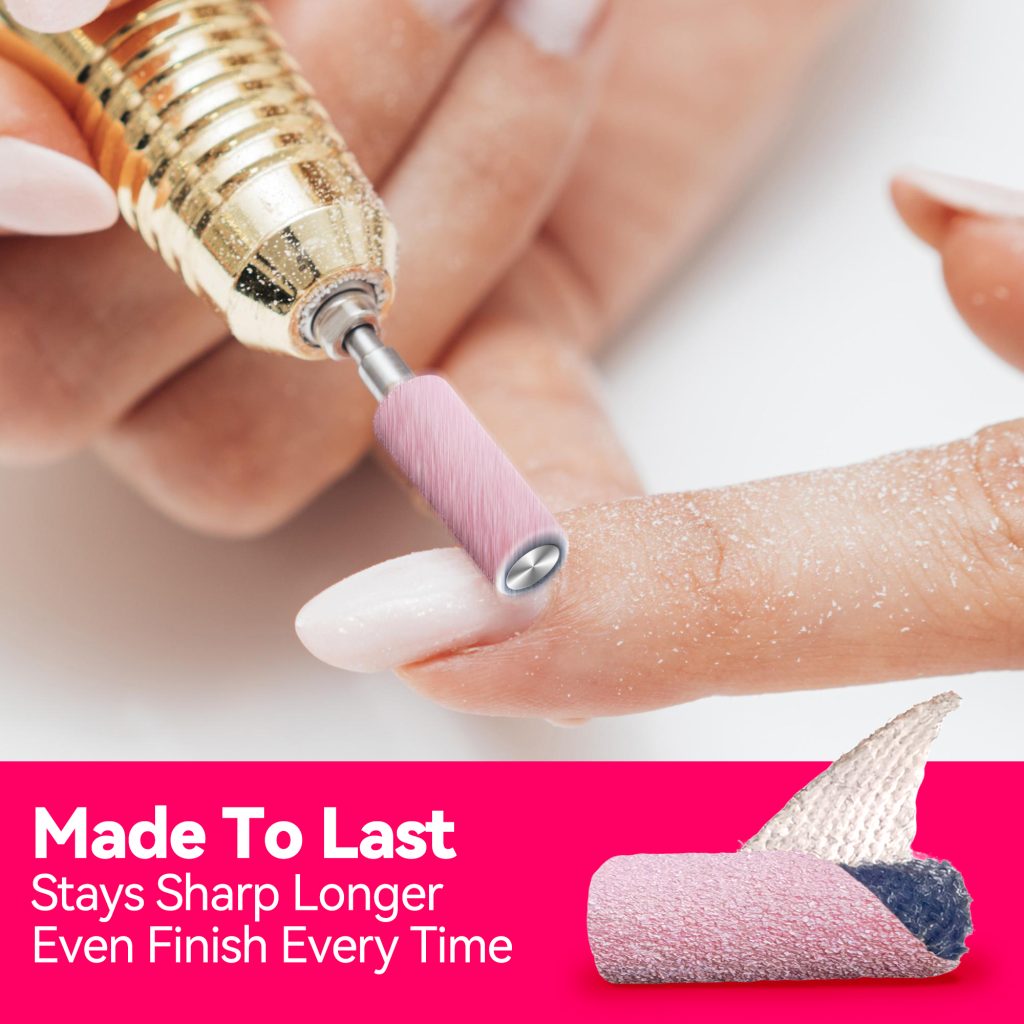
Use a mini sanding band for detail. After pushing, switch to a fine-grit mini sanding band on low speed to gently remove the dead cuticle tissue left on the nail plate. Work in light, sweeping strokes. Do not touch the living skin.
Trim only dead skin. If you see a loose, detached flap of dead skin, you may trim it with a sharp cuticle nipper. Never cut living tissue. If you are unsure, do not cut.
Hydrate. Finish with cuticle oil. Massage it into the nail and surrounding skin. This keeps the area flexible and prevents cracking.
Application Scenarios for Mini Sanding Bands
Mini sanding bands are useful in many nail care situations.
Natural nail preparation. Before gel polish, use a fine-grit mini band to gently remove shine and dead cuticle tissue from the nail plate. This creates a clean surface for adhesion.
Gel polish removal. Use a medium-grit mini band to file off the top coat and break the seal before acetone soaking. This speeds up removal and reduces soaking time.
Sidewall cleaning. The small diameter allows you to clean tight sidewalls without touching the skin. This is helpful for clients with deep nail folds or narrow nails.
Surface smoothing. Fine-grit mini bands can smooth ridges, minor imperfections, and rough patches on natural nails or enhancements.
Refining enhancements. After applying acrylic or builder gel, mini bands can refine the surface, blend edges, and shape small areas around the cuticle.
Pedicure detail. For toenails, mini bands help clean around the nail edges, smooth thick nails, and prepare the nail plate for polish.
Small nail beds. Clients with small nails, including children or those with naturally narrow nail beds, benefit from the precision of mini bands.
Common Mistakes to Avoid
Do not use coarse grit on natural nails. Do not press hard. Do not hold the band in one spot. Do not file living skin. Do not reuse disposable bands. Do not skip the dehydrating step after prep. Do not use a mini band on an infected or damaged nail without professional advice.
The Bottom Line
Mini sanding bands are a small tool with a big role in nail care. They offer precision, hygiene, and control. They are ideal for natural nail prep, gel removal, cuticle detail, and smoothing. They can be used to remove dead cuticle tissue from the nail plate, but never on living skin. With the right grit, low speed, light pressure, and constant motion, they help you achieve a clean, smooth, professional finish without damaging the natural nail. Whether you are a professional or a home user, mini sanding bands deserve a place in your kit.
Read also: How to Fix a Broken Nail: DIY and Professional Repair Techniques